ABM survey shows the mining and metals industry advancing on the ESG agenda
A survey by ABM (Brazilian Metallurgy, Materials and Mining Association) showed that most large Brazilian companies in the mining, metals, and materials industries have programs to implement ESG parameters (environmental, social, and governance) in place. In such a scenario, they give top priority to ensuring compliance with laws and regulations, minimizing risks, and improving their institutional image.
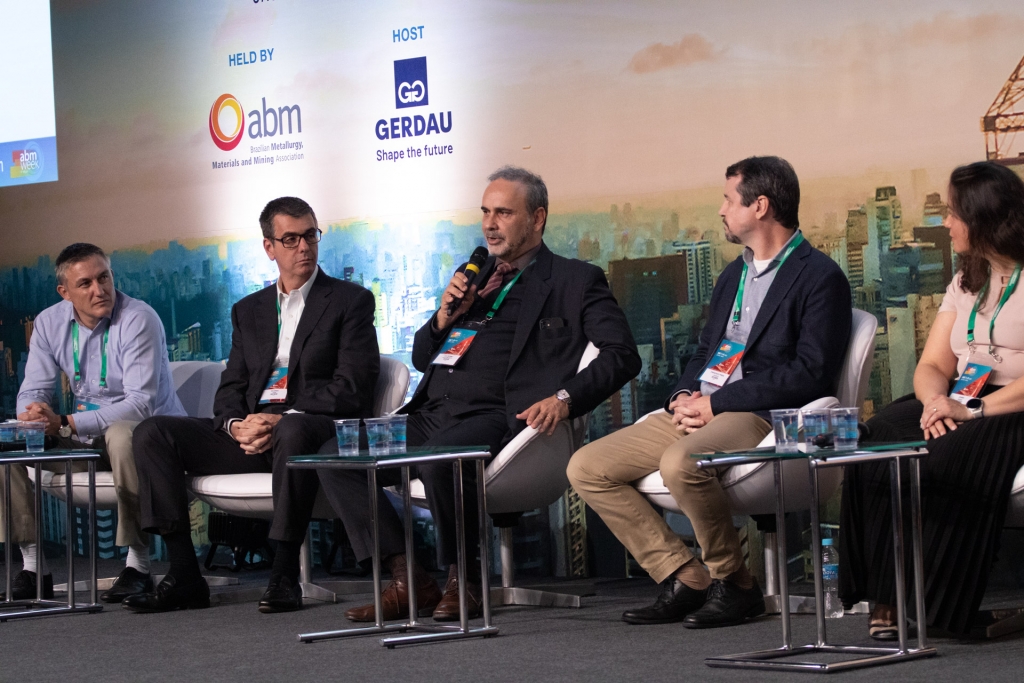
The survey was presented at the Leaders Forum, an event that brought together leaders from some of the main players in the sector to discuss the ESG agenda held on June 7 as part of the 6th edition of ABM WEEK.
It was carried out by ABM in April 2022 based on responses from nine companies. Most of the questions were based on the approach of an investigation carried out by Aberje (Brazilian Association of Business Communication) in September 2021, involving 79 companies from different segments.
The ABM survey found that 89% of the participating companies have adopted programs or actions related to the ESG principles. Most of them have a formal structure to deal with this matter and 22% have assigned a dedicated team to monitor and manage the various ESG factors. This percentage was 9% in the Aberje survey, which indicates that the mining, metals, and materials industries have advanced further in this agenda implementation.
With respect to the governance aspect, all responding companies indicated as their priority goals to minimize risks to the business (vis-à-vis 62% in the Aberje survey), ensure compliance with legislation (54% for Aberje), and enhance the company's reputation (57% for Aberje).
In addition, the ABM study showed that most companies have set out parameters and targets to reduce the organization's overall water use (78%, against 30% of Aberje respondents) and minimize greenhouse gas emissions (66 %, against 51% for Aberje).
For 66% of companies in the industry, the main challenges in implementing the ESG agenda are the difficulty in measuring performance and quantifying benefits and the lack of transparent, effective monitoring tools.
Companies that participated in the Leaders Forum have made progress in adopting ESG principles over the past few years.
At Gerdau, for instance, the process has deepened since 2014, Cenira de Moura Nunes, general environmental manager, explains.
“Starting that year, we saw a cultural change in the company, which enabled it to become more diverse, more inclusive, and more agile. We’ve prepared our company to incorporate the concepts of sustainability, a value greater than just financial value, in the organization’s view,” she added.
Novelis, the world leader in recycling, “has contributed since the very beginning of its operations here to the country’s recycling structure by setting up collection centers and working very closely with cooperatives,” Francisco Pires, CEO of Novelis South America, points out.
Ricardo Fonseca de Mendonça Lima, vice president of CBMM, highlighted the company's history of social responsibility, which started up its operations in Araxá (state of Minas Gerais) 60 years ago, by investing in capacity building initiatives for the surrounding communities. “We provide education to our employees' children. It’s possible to see their professional growth over time,” he states.
Developed by Ternium Brasil, the concept of social license emerged precisely because of the need to ensure the business social sustainability, Titus Friedrich Schaar, COO, explained. Progress in implementing ESG principles will only be possible if the industry acknowledges its current impact, he claims.
“Our industry accounts for about 10% of the world's emissions. This is too much. First of all, we have to recognize that,” he added.
Consultant Vânia Lúcia de Lima Andrade, member of ABM’s board of directors and coordinator of the Leaders Forum, emphasized that industry players – and even consumers – should decide whether they are “willing to pay more for something properly produced in accordance with ESG standards. We need to be consistent if we want to get the social license we need,” she pointed out.
Lima Andrade asked the Forum participants about what ABM's role should be in promoting the ESG agenda in the sector. They were unanimous in advocating that ABM should work to disseminate good practices and examples.
“Only by example we will be able to promote the ESG agenda. ABM could play a key role by spreading good examples of sustainability based on its core asset, knowledge,” ArcelorMittal’s Guilherme Abreu suggested.
The 6th ABM WEEK is hosted by Gerdau and is sponsored by the following companies: Açokorte, Alkegen, Amepa GmbH, Aperam, ArcelorMittal, Atomat Services, AutoForm, BM Group/Polytec,BRC, BR Event Materials ,CBMM, Combustol, Clariant, Danieli, Dassault Systèmes, DME Engenharia, Eirich, Enacom, Engineering, Evonik, Fosbel, GSI, Harsco, Hatch/CISDI, Ibar, Imerys, IMS Messsysteme GmbH, Isra Vision Parsytec, John Cockerill Industry, Kuttner, Metso Outotec, Nalco Water/Ecolab, Nouryon, Primetals Technologies, PSI Metals, Reframax , RHI Magnesita, Saint-Gobain, SMS Group Paul Wurth/ Vetta, Spraying Systems, Suez, SunCoke, Tecnosulfur, Ternium, Timken, Thermo Fischer, TopSolid, TRB, Unimetal, Usiminas, Vale, Vamtec, Vesuvius, Villares Metals, Wallonia.be (ADI – Industrial Services, John Cockerill Hydrogen, BorderSystem, Datanet International, Synthetis e PEPITe), White Martins, e Yellow Solution.Special support: CNPq. Institutional support: Abal, Abendi, Abifa, AIST, AIST Mena, Alacero, CBCA, Ibram, Icz, Instituto Aço Brasil, CIMM, Ind4.0.







Deixe seu comentário